MSPS leads international mental health knowledge exchange for Indonesian Government
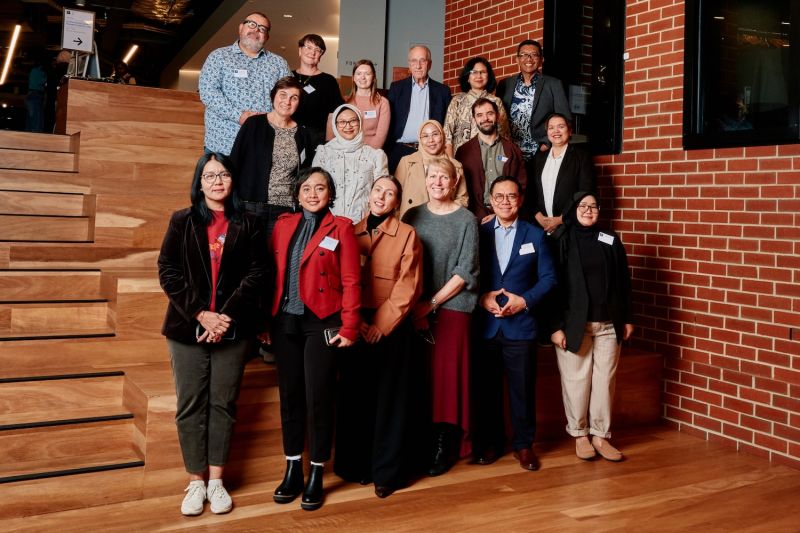
This June, the Melbourne School of Psychological Sciences hosted a three-day knowledge exchange program for a senior Indonesian Government delegation to explore lessons from Victorian mental health reform and their relevance to Indonesia's ongoing mental health transformation.
Leaders from Indonesia’s Ministry of Health, Coordinating Ministry for Human Development and Cultural Affairs, Ministry of Social Affairs (Kemenko PMK), National Development Planning Agency (Bappenas), and the National Center for Mental Health made up the delegation, reflecting a strong commitment to integrated, cross-sector reform.
Bringing together policymakers, academic leaders, lived-experience leaders, senior clinicians and sector partners, the packed program of talks, roundtables and site visits explored strengthening mental health systems from a range of interlocking vantage points and across three key areas: primary care integration, youth mental health, and ageing and long-term care.
Led by Melbourne School of Psychological Sciences, the program drew on expertise from across the Faculty of Medicine, Dentistry and Health Sciences, including colleagues from the Melbourne School of Population and Global Health, the Department of Psychiatry, and the Department of General Practice and Primary Care. It also convened senior leaders from across Australia's mental health sector, including the National Mental Health Commission, Beyond Blue, BEING Mental Health Consumers, the Victorian Collaborative Centre for Mental Health and Wellbeing, Orygen and Orygen Global, the Royal Melbourne Hospital Older Adult Mental Health Program and La Trobe University's Care Economy Research Institute (CERI).
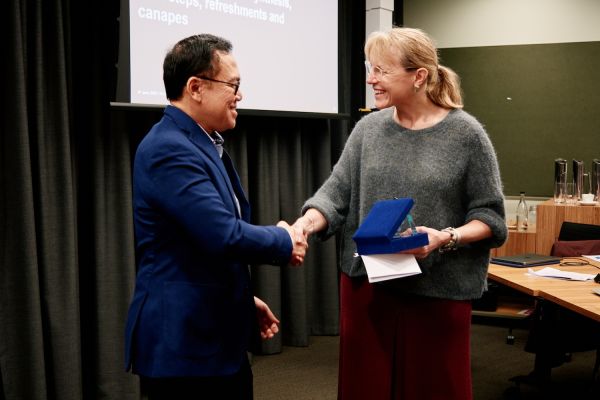
Head of School, Kristen Pammer, shakes hands with Imran Pambudi, Director of Vulnerable Group Health, Indonesian Ministry of Health.
The format was deliberately designed to prioritise discussion and shared experience to provide space for exploration of implementation in the Indonesian context. Australia's policy reform, clinical and community research, and innovations in systems design were explored through such diverse lenses as stigma reduction, disaster response, rural and remote health, workforce development and human rights law.
Among the contributors were David McGrath, Chief Executive Officer of the National Mental Health Commission; Professor Sarah Wilson, Chief Executive Officer of the Victorian Collaborative Centre for Mental Health and Wellbeing; Professor Pat McGorry, CEO of Orygen; and Professor Irene Blackberry, Director of La Trobe University's Care Economy Research Institute.
Across the three days, conversations highlighted the importance of co-designing policy, systems, and services with end-users, adapting initiatives to local context, and the essential role of community and families in building accessible care systems. Contributions also highlighted the complexity and challenges of delivering sustainable reform.
The program was originally conceived by Dr Chris Groot in collaboration with the World Bank, an extension of previous collaborations with the institution on the reduction of stigma and discrimination about mental ill-health. He noted:
“This program is so much more than a one-off knowledge exchange. From the beginning, we saw strong alignment between University of Melbourne expertise, the World Bank’s strategic priorities in health and development, and a shared vision for building accessible, safe, effective, and equitable health systems. This convening has provided a foundation for ongoing engagement with the Government of Indonesia and the World Bank, and has already sparked exciting collaborations across research, policy and education. We are looking forward to building on that momentum in the months and years ahead.”
The program architecture was developed by Melbourne School of Psychological Sciences academic leads Dr Chris Groot, Associate Professor Caitlin Hitchcock and Associate Professor Trevor Steward, with strategic program leadership and delivery provided by Dr Louise Sheedy, supported by Dr Beth Hobern. The team is deeply grateful to the many contributors from across the University, Government, health services and partner organisations whose generous contribution of time, expertise and practical insights helped create a rich and highly collaborative program.
The success of the program has inspired the team to build on this model of engagement, supporting future international collaborations while strengthening the University's global profile in mental health research, policy, education and system reform.