Zoë Wilson: finding psychology in birdsong
Zoë Wilson is not your typical psychology PhD candidate; instead of studying human minds, she studies birds.
Zoë Wilson is not your typical PhD candidate in psychology; instead of studying human minds, she studies birds. Beginning her university studies at the Central Conservatorium of Music before continuing her path at the University of Melbourne, Zoë brings a creative and unique perspective to psychology.
Her work is driven by a lifelong deep love of nature, especially her fascination with the avian world. Rather than following a traditional conservation pathway, Zoë chose to contribute from a different angle, using psychological and analytical tools to contribute to conservation efforts.
I don’t have the traditional background of people who work in conservation, but my research is my way of throwing my hat in the ring.
The right supervisors at the right time
For Zoë, the decision to pursue a PhD came down to meeting her now-supervisors at the right time.
During her Honours year, she worked closely with Professor Charles Kemp. His curiosity in pursuing interesting research projects, along with his respect for others’ ideas, left a lasting impression. He encouraged her to explore ideas freely and gave her a level of independence that helped build her confidence and sense of ownership over her work.
Near the end of that year, Professor Kemp introduced Zoë to Dr Vanessa Ferdinand, simply because he thought they would get along. They bonded instantly over a shared love of birds, but what stood out to Zoë was Dr Ferdinand's creative, boundary-pushing approach to research.
When they offered to join forces and supervise me in a PhD, I couldn’t believe my luck; the combination of the two of them is exactly the kind of researcher I want to be.
Understanding birds – and the language of song
While most psychology research focuses on people, Zoë’s work turns outward to birds and how they communicate. Her first project explored how birds are named and categorised in Indigenous languages, examining whether these folk categories reflect evolutionary relationships or physical characteristics.
From there, her focus has shifted to the birds themselves, particularly the cultural transmission and evolution of birdsong.
Working with collaborators at the University of Western Sydney’s Lyrebird Lab, Zoë analyses an extensive database of annotated Albert’s Lyrebird songs, investigating whether their vocalisations contain language-like structures or evidence of lyrebirds using categorisation systems for the birds and calls they are mimicking.
Her research also extends into conservation practice. With a grant from BirdLife Australia, Zoë records Eastern Bristlebirds in the captive breeding program at Currumbin Wildlife Sanctuary. There, she is discovering how captivity affects their song culture and developing methods to identify individual birds by their song once reintroduced into the wild.
Psychology in the field
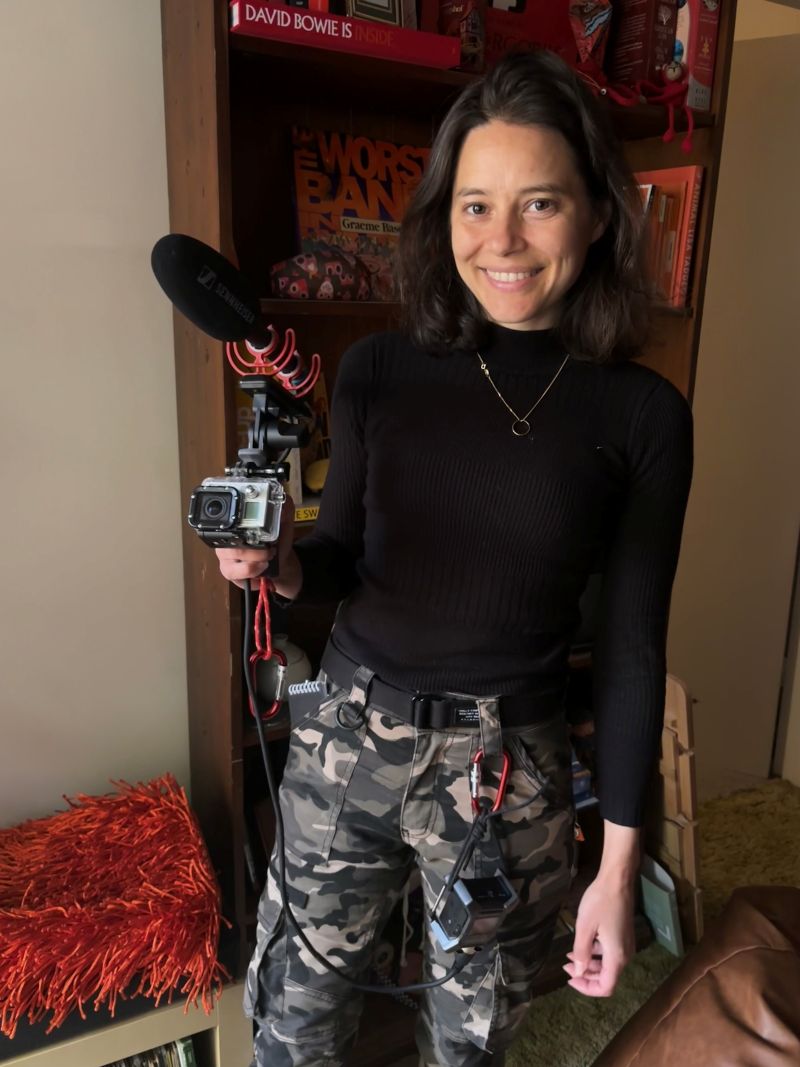
One of the most rewarding aspects of Zoë’s work has been the opportunity to step outside the lab. Fieldwork, unusual within a psychology program, has become a defining part of her experience.
Through close observation, she has fallen in love with the bristlebirds she studies, from their “funny little personalities” to their resilience and active participation in their own conservation.
Everything I see them do makes me believe that they want to survive and to thrive and to look after one another.
A research community that feels like home
Despite working in a niche area within psychology, Zoë has found a strong sense of belonging in the Complex Human Data Hub.
She describes the community as collaborative and supportive, where daily family-style lunches, tea breaks and celebrating each other's successes create a positive environment.
“My PhD colleagues are just the best...It’s very gratifying how much people like hearing about my birds even though what I do is quite different to the research interests of any other student in the Hub!”
Using psychology to help nature heal itself
Zoë’s research is built on her desire to contribute to conservation using her unique skills and attributes. Whether she’s analysing birdsong or observing behaviour in the field, her work is driven by the belief that birds, and nature more broadly, have an incredible capacity to survive and adapt.
They give me hope that nature has immense power to heal itself if we just stop taking away its resources.
By approaching conservation from a psychological perspective, Zoë is finding her own way to support that process, connecting curiosity, care and a deep respect for the natural world.