Misinformation and disinformation are among the greatest threats to democratic stability, national security, and public trust.
In 2024, the World Economic Forum identified them as the most severe short-term global risk.
Meanwhile the Senate Select Committee on Foreign Interference through Social Media and the recent Annual Threat Assessment by ASIO have highlighted them as a growing threat to Australian democracy.
These threats are exacerbated by the increasing sophistication of influence operations, which leverage emerging technologies to manipulate public perception and disrupt democratic processes.
The Information and Influence Lab has a variety of projects designed to address these threats. Please see our current projects to see how we are doing this.
We gratefully acknowledge the support of the following funding agencies:





-
Misinformation
The primary focus of the lab is developing ways to reduce the spread of misinformation, especially on social media, and to mitigate its harmful effects. We are also interested in developing better methods to detect it and to measure its spread.
-
Explainable AI
AI is a major contributor to the spread of misinformation. Increasingly, it is also being use to mitigate its harms. However, to do this ethically, AI's decisions need to be explained in a way that humans can understand. We have a number of research projects investigating the best way to do this.
-
Wisdom of Crowds
Increasingly, crowds are being used to both detect and moderate misinformation. We have a number of projects investigating how best to utilise crowds and how to ensure that individuals within a crowd work together in an efficient manner.
The majority of the past research in the lab falls into six themes:
Visual Perception: Underlying Processes
Visual perception seems effortless but how does it actually occur? What are the underlying processes?
Visual Expertise: Perceptual Training
In the medical domain, experts are often required to make diagnoses by viewing medical images. How did they gain their visual expertise?
Behaviour Change
People often display a range of unhelpful behaviours. How can we “nudge” people to help them adopt more beneficial behaviours?
Decision Making
Why do people make the decisions that they do? What influences these decisions?
Pedagogical Research
How can we help our students learn better?
Object Tracking
Humans live in a dynamic world. How are we able to keep track of what is where?
Return home
Prof Piers Howe
Head of Information and Influence Lab
Co-chair Information and Influence Hub
Co-chair Hallmark Research Initiative: Fighting Harmful Online Content
Member of the International Panel for the Information Environment
Please click here for his CV and here for his Google scholar profile
Please click here for his ORCID profile
Please click here for a brief bio

Current PhD Students
Allegra Micomonaco (2024 - ) (with A/Prof Camille Short)
Max von Sabler (2021 - ) (with Prof Ron Borland)
Jessica Marris (2017 - ) (with A/Prof Andy Perfors)
Completed PhD Students
Kathryn Hull (2019 - 2023 ) (with A/Prof Luke Smillie)
Marcellin Martinie (2016 - 2020) (with A/Prof Tom Wilkening)
Todd Larson Landers (2016 - 2024) (with Prof Kashima)
Campbell Pryor (2015 - 2019) (with A/Prof Andy Perfors)
Weijia Chen (2014 - 2021)
Annie Blunden (2014 - 2020) (with Dr. Dan Little)
Xian Liew (2013 - 2017) (with Dr. Dan Little)
Mark Lapierre (2012 - 2014) (with Dr. Simon Cropper)
Past Masters Student
Johanna Stephens
Honours Students
2025: Skye Burney, Nick Lopez
2024: Brayden Smith, Saloni Sindhu, Molly Janes
2023: Matilda Robertson, Ferron Dearnley
2022: Luke Sims, Molly Noone,
2021: Catherine Mina, Rosemary Neville-Jones
2020: Serene Lee, Bridget Giblin, Alana Schembri
2019: Feiven Fan, Jakob McKew, Rhys Haslam, Shut (Melanie) Lau
2018: Kathryn Hull
2017: Bridget O’Bree
2016: Andrew Chin
2015: Sara Rushdiah (with Prof Kashima), Nicki Ansari (with Prof Kashima), John Maguire, Todd Landes
2014: Campbell Pryor, Justin Kelly, Tina Luu
2013: JiaWen Poh, Jenny Markov, Weijia Chen
2012: Adam Ferguson
2011: Charlotte Hudson, Natalie Incledon, Alice Tsai
Interns/Summer students
Yu Liu (2024)
Margaret Webb (2013)
Dwight Curtis (2007)
Hersh Sagreiya (2006-2007)
RA’s
Daniele Martinie (2016 - 2018)
Adriana Vargas Saenz (2015 - 2018)
Annie Blunden (2013 - 2014)
Charlotte Hudson (2012)
Robert de Lisle (2011)
Back to home
Government Reports
These first two reports were written for the Dept. of Prime Minister and Cabinet to help them create a national strategic plan to increase societal resilience to foreign disinformation. They are not yet ready for public release. The third report was written for the Victorian Government.
- Howe, P, and Saletta, M (2025). Societal Resilience to Foreign Disinformation, Misinformation and Malinformation (DMMI) in a Technology-Enabled Future. Report for the Department of the Prime Minister and Cabinet. (59 pages, Funded by the Department of Prime Minister and Cabinet.)
- Howe, P, and Saletta, M (2024). Societal Resilience to Disinformation, Misinformation and Malinformation (DMMI) in a Technology-Enabled Future. Report for the Department of the Prime Minister and Cabinet. (63 pages, Funded by the Department of Prime Minister and Cabinet.)
- Howe PDL, Vargas-Saenz, A, Hulbert, CA, Boldero, JM. (2018). Gambling and problem gambling in Victoria, Victorian Responsible Gambling Foundation, Melbourne. [PDF]
Journal Articles
Italics denote my students and RAs.
2025
- R. Singh, T. Miller, L. Sonenberg, E. Velloso, F. Vetere and P. Howe, "An Actionability Assessment Tool for Enhancing Algorithmic Recourse in Explainable AI," in IEEE Transactions on Human-Machine Systems, vol. 55, no. 4, pp. 519-528, Aug. 2025, doi: 10.1109/THMS.2025.3582285.
- Fay, N., Ransom, K. J., Walker, B., Howe, P. D. L., Perfors, A., & Kashima, Y. (2025). Truth over falsehood: Experimental evidence on what persuades and spreads.Journal of Personality and Social Psychology. Advance online publication. https://doi.org/10.1037/pspa0000467
- Mickelberg AJ, Walker B, Ecker UKH, Howe PDL, Perfors A, Fay N (2025) Did he or didn’t he? Mixed evidence for the continued influence of retracted misinformation on person impressions. PLoS One 20(5): e0322045. https://doi.org/10.1371/journal.pone.0322045
2024
- Kruger, A, Saletta, M, Ahmad, A, Howe, P (2024). Structured expert elicitation on disinformation, misinformation, and malign influence: Barriers, strategies, and opportunities. Harvard Kennedy School of Misinformation Review. 5(7). [PDF]
- Singh, R, Miller T, Sonenberg, L, Velloso, E, Vetere, F, Howe, P, Dourish, P. (2024). An Actionability Assessment Tool for Explainable AI. arXiv preprint. [PDF]
- Mickleberg, A, Walker, B, Ecker, U, Howe, P, Perfors, A, Fay, N (2024). Does mud always stick? No evidence for the continued influence of misinformation on person impressions. Collabra, 10(1). [PDF]
- Howe, P.D.L., Martinie, M., Wilkening, T. (2024). Using cross-domain expertise to aggregate judgments when within-domain expertise is unknown. Decision, 11(1), 35-59. [PDF]
- Howe, P, Perfors, A, Ransom, K, Walker, B, Fay, N, Kashima, Y, Saletta, M, Dong, S. (2024). Self-certification: A novel method for increasing sharing discernment on social media. PlOS One, 9(6): e0303025. [PDF]
2023
- Howe, P.D.L., Fay, N., Saletta, M., Hovy, E. (2023). ChatGPT’s advice is perceived as better than that of a professional advice columnists. Frontiers in Psychology, 14. [PDF]
- Vered, M, Livni, T, Howe, P.D.L., Miller, T., Sonenberg, L. (2023) The effects of explanation on automation bias. Artificial Intelligence, 322, C, 103952. [PDF]
- Marris, J, Perfors, A, Michell, D, Wang, W, McCusker, MW, Lovell, TJH, Gibson, RN, Gaillard, F, Howe, PDL (2023). Evaluating the effectiveness of different perceptual training methods in a difficult visual discrimination task with ultrasound images. Cognitive Research: Principle and Implications, 8(1), 1-18. [PDF]
- Marris, J, Perfors, A, Michell, D, Wang, W, McCusker, MW, Lovell, TJH, Gibson, RN, Gaillard, F, Howe, PDL (2023). Testing the effectiveness of augmenting perceptual training with annotations and steps in a difficult visual discrimination task. Proceedings of the Annual Meeting of the Cognitive Science Society, 45(45). [PDF]
- Howe, P, Perfors, A, Ransom, K, Walker, B, Fay, N, Kashima, Y, Saletta, M, Dong, S. (2023). Self-censorship appears to be an effective way of reducing the spread of misinformation on social media. Proceedings of the Annual Meeting of the Cognitive Science Society, 45(45). [PDF]
- Singh, R, Miller, T, Lyons, H, Sonenberg, L, Velloso, E, Vetere, F, Howe, P, Dourish, P (2023). Directive explanations for the actionable explainability in machine learning applications. ACM Transactions on Interactive Intelligent Systems, 13(4), 23, 1-26. [PDF]
- Grossman, I., Rotella, A., Hutcherson, C.,…Wilkening, T. (2023). Insights into accuracy of social scientists’ forecasts of societal change. Nature Human Behaviour, 7(4), 484-501. [PDF]
2022
- Howe, P.D.L., Perfors, A., Walker, B., Kashima, Y. & Fay, N. (2022). Base rate neglect and conservatism in probabilistic reasoning: Insights from eliciting full distributions. Judgment & Decision Making, 17(5). [PDF]
- Mickelberg, B., Walker, B., Ecker, U.K.H., Howe, P.D.L., Perfors, A. & Fay, N. (2022). Impression formation stimuli: A corpus of behaviour statements rated on morality, competence, informativeness, and believability. PLOS One,17(6), e0269393. [PDF]
- Hull, K.E., Overbeck, J.R., Smillie, L.D. & Howe, P.D.L. (2022). The P-Word: Power aversion and responsibility aversion as explanations for the avoidance of power. Journal of Applied Social Psychology, 52(3), 184-196. [PDF]
- Blunden, A.G., Hammond, D.A., Howe, P.D.L. & Little, D.R. (2022). Characterizing the time course of decision-making in change detection. Psychology Review, 129(1), 107. [PDF]
- Wilkening, T, Martinie, M, & Howe, PDL (2021). Hidden experts in the crowd: Using meta-predictions to leverage expertise in single-question prediction problems. Management Science, 68(1), 487-508. [PDF]
2021
- Howe, PDL, Perfors, A, & Ransom, K (2021). What interventions can decrease or increase belief polarisation in a population of rational agents. Proceedings of the Annual Meeting of the Cognitive Society, 43. [PDF]
- Marris, J, Perfors, A, Mitchell, D., Wang, W, McCusker, MW, Lovell, TJH, Gibson, RN, Gaillard, F, & Howe, PDL (2021). How effective is perceptual training? Evaluating two perceptual training methods on a difficult visual categorisation task. Proceedings of the Annual Meeting of the Cognitive Society, 43. [PDF]
- Howe, PDL, & Lee, SBW (2021). Attribute Amnesia in the Auditory Domain. Perception, 50(7), 664-671. [PDF]
- Landes, TL, Howe, PDL, Kashima, Y (2021). A hierarchy of mindreading strategies in joint action participation. Judgment & Decision Making, 16(4). [PDF]
- Baillie, E, Howe, PDL, Perfors, A, Miller, T, Kashima, Y, & Beger, A. (2021). Explainable models for forecasting the emergence of political instability. PLOS ONE, 16(7), e0254350. [PDF]
2020
- Vered, M, Howe, PDL, Miller, T, Sonenberg, L, & Velloso, E (2020). Demand-driven transparency for monitoring intelligent agents. IEEE Transactions on Human-Machine Systems, 50(3), 264-275. [PDF]
- Martinie, M, Wilkening, T, & Howe, PDL (2020). Using meta-predictions to identify experts in the crowd when past performance is unknown. PLOS ONE, 15(4), e0232058. [PDF]
- Blunden, AG, Howe, PDL, & Little, DL (2020). Evidence that within-dimension features are processed coactively. Attention, Perception & Psychophysics, 82(1), 193-227. [PDF]
2019
- Howe, PDL, Vargas-Saenz, McNeill, IM (2019). Commitments increase preparedness for floods. PLOS ONE, 14(8). [PDF]
- Pryor, C, Pefors, A, & Howe, PDL (2019). Conformity to the descriptive norms of people with opposing political or social beliefs. PLOS ONE, 14(7) [PDF]
- Adams, M, Chen, W, Holcdorf, D, McCusker, MW, Howe, PDL, & Gaillard, F (2019). Computer vs human: Deep learning versus perceptual training for the detection of neck of femur fractures. Journal of Medical Imaging and Radiation Oncology, 63(1), 27-32. [PDF]
- Howe, PDL, Vargas-Saenz, A, Hulbert, CA, & Boldero, JM (2019). Predictors of gambling and problem gambling in Victoria, Australia. PLoS One, 14(1), e0209277. [PDF]
- Pryor, C, Perfors, A, & Howe, PDL (2019). Even arbitrary norms influence moral decision-making. Nature Human Behaviour, 3(1), 57. [PDF]
2018
- Pryor, C, Perfors, A, & Howe, PDL (2018). Reversing the endowment effect. Judgment and Decision Making, 13(3), 275-286. [PDF]
- Howe, PDL, Lodge, JM, & McKague, M (2018). A comparison of the effectiveness of two computer-based learning aids. Frontiers in Education, 3,51. [PDF]
- Howe, PDL, McKague, M, Lodge, JM, Blunden, AG, & Saw, G. (2018). PeerWise: Evaluating the effectiveness of a web-based learning aid in a second-year psychology subject. Psychology Learning & Teaching, 17(2), 166-176. [PDF]
- Howe, PDL & Perfors, A (2018). An argument for how (and why) to incentivise replication. Behavioural and Brain Sciences, 41, e135. [PDF]
- Howe, PDL, Boldero, J, McNeil, IM, Vargas-Saenz, A, & Handmer, J (2018). Increasing preparedness for wildfires by informing residents of their community’s social norms. Natural Hazards Review, 19(2). [PDF]
- Howe PDL, Vargas-Saenz, A, Hulbert, CA, & Boldero, JM. (2018). Gambling and problem gambling in Victoria, Victorian Responsible Gambling Foundation, Melbourne. Final Report. [PDF]
- Pryor, C & Howe PDL (2018). Conform to the social norm: why people follow what other people do. The Conversation, Dec 18. [Link]
2017
- Chen, W & Howe, PDL (2017). Attribute amnesia is greatly reduced with novel stimuli. PeerJ, e4016. [PDF]
- Howe, PDL (2017). Natural scenes can be identified as rapidly as individual features. Attention, Perception & Psychophysics, 79(6), 1674-1681. [PDF]
- Chen, W, HolcDorf, D, McCusker, MW, Gaillard, F, & Howe, PDL (2017). Perceptual training to improve hip fracture identification in conventional radiographs. PLoS One, 12(12), e0189192. [PDF]
- Lapierre, MD, Cropper SJ, & Howe PDL (2017) Shared processing in multiple object tracking and visual working memory in the absence of response order and task order confounds. PLoS One, 12(4):20. [PDF]
- Howe, PDL & Ferguson, A (2017). The Advantages of Combining the Simultaneous-Sequential Paradigm with Systems Factorial Technology. D. R. Little, N. Altieri, M. Fific & C-T. Yang (Eds.). Systems Factorial Technology: A Theory Driven Methodology for the Identification of Perceptual and Cognitive Mechanisms. Elsevier. [PDF]
- Howe, PDL (2017). Hemispatial Neglect, Balint’s Syndrome and Attention. Reference Module in Neuroscience and Biobehavioral Psychology. Elsevier, UK. [PDF]
- Howe, PDL, Evans KK, Pedersini R, Horowitz TS, Wolfe JM, & Cohen M (2017). The Influence of Selective Attention on Consciousness. Reference Module in Neuroscience and Biobehavioral Psychology. Elsevier, UK. [PDF]
- Miller, T, Howe, PDL, & Sonenberg, L. (2017). Explainable AI: Beware of Inmates Running the Asylum. In IJCAI 2017 Workshop on Explainable Artificial Intelligence (XAI). [PDF]
2016
- Maguire, JF & Howe, PDL (2016). Failure to detect meaning in RSVP at 27 ms per picture. Attention, Perception & Psychophysics, 78(5):1405-1413.[PDF]
- Liew, SX, Howe, PDL, & Little, DR (2016). The appropriacy of averaging in the study of context effects. Psychonomic Bulletin and Review, 23(5):1639-1646. [PDF]
- Wang, TSL, Christie, N, Howe, PDL, & Little, DR (2016). Global cue inconsistency diminishes learning of cue validity. Frontiers in Psychology, 7:10. [PDF]
- Landes, TL, Kashima, Y, & Howe, PDL (2016) Investigating the effect of gaze cues and emotional expressions on the affective evaluations of unfamiliar faces. PLoS One, 11(9):24. [PDF]
- Howe, PDL & Carter, OL (2016). Hallucinations and mental imagery demonstrate ‘top-down’ effects on visual perception. Behavioural and Brain Sciences, 39:2. [PDF]
- Chen, W & Howe, PDL (2016). Comparing breast screening protocols: Inserting catch trials does not improve sensitivity over double screening. PLoS One, 11(10):12. [PDF]
2015
- Pryor, CG & Howe PDL (2015). Bilateral advantages in subitization with visual masking. Perception, 44(6), 628-642. [PDF]
- Howe, PDL & Ferguson, A (2015). The identity-location binding problem. Cognitive Science, 39(7), 1622-1645. [PDF]
- Luu, T & Howe, PDL (2015). Extrapolation occurs in multiple object tracking when eye movements are controlled. Attention, Perception and Psychophysics, 77(6), 1919-1929.[PDF]
- Chen, W, Blunden, AG, & Howe, PDL (2015). Part-whole information assists in topological x topological but non in orientation x orientation conjunction searches. Attention, Perception and Psychophysics, 77(3), 777-789. [PDF]
- Howe, PDL & Little, DR (2015). Searching for the highest number. Attention, Perception and Psychophysics, 77(2), 423-440. [PDF]
2014
- Holcombe, AO, Chen, W-Y, & Howe, PDL (2014). Object tracking: Absence of long-range spatial interference supports resource theories. Journal of Vision, 14(6):1. [PDF]
- Howe, PDL & Webb, ME (2014). Detecting unidentified changes. PLoS One, 9(1): e84490. [PDF]
- Howe, PDL & Webb, ME (2014). Know this: the ‘sixth sense’ is all in your head. The Conversation, Jan 13. [Link]
2013
- Howe, PDL, Holcombe, AO, Lapierre, MD, & Cropper, SJ (2013). Visually tracking and localizing expanding and contracting objects. Perception, 42(12), 1281-1300. [PDF]
- Lapierre, M, Howe, PDL & Cropper, SJ (2013). Transfer of learning between hemifields in multiple object tracking: Memory reduces constraints of attention. PLoS One, 8(12): e83872. [PDF]
- Bowers, AR, Anastasio, RJ, Sheldon, SS, O’Connor, MG, Holis, AM, Howe, PDL, & Horowitz, TS (2013). Can we improve clinical prediction of at-risk older drivers? Accident Analysis & Prevention,59, 537-547. [PDF]
- Chen, WY, Howe, PDL, & Holcombe, AO (2013). Resource demands of object tracking and differential allocation of the resource. Attention, Perception & Psychophysics, 75(4), 710-725. [PDF]
2012
- Howe, PDL & Holcombe, AO (2012). Motion information is sometimes used as an aid to the visual tracking of objects. Journal of Vision, 12(13):10, 1-10. [PDF]
- Howe, PDL & Holcombe, AO (2012). The effect of visual distinctiveness on multiple object tracking performance. Frontiers In Psychology, 3:307. [PDF]
- Hudson, C, Howe, PDL, & Little, DR (2012). Hemifield effects in multiple identity tracking. PLoS One, 7(8). [PDF]
- Howe, PDL, Incledon, NC, & Little, DR (2012). Can attention be confined to just part of a moving object? Revisiting target-distractor merging in multiple object tracking. PLoS One, 7(7). [PDF]
2011
- Cohen, MA, Pinto, Y, Howe, PDL, & Horowitz, TS (2011). The what-where trade-off in multiple-identity tracking. Attention, Perception and Psychophysics, 73(5), 1422-1434. [PDF]
- Howe, PDL, Drew, T, Pinot, Y, & Horowitz, TS (2011). Remapping attention in multiple object tracking. Vision Research, 51(5), 489-95. [PDF]
- Bowers, AR, Anastasio, RJ, Howe, PDL, O’Connor, MG, Hollis, AM, Kapust, LR, Bronstad, PM, & Horowitz, TS (2011) Dynamic attention as a predictor of driving performance in clinical populations: preliminary results. Proceedings of the 6th International Driving Symposium on Human Factors in Driver Assessment, Training and Vehicle Design. Lake Tahoe, CA. 307-313. [PDF]
2010
- Howe, PDL, Pinto, Y, & Horowitz, TS (2010). The coordinate systems used in visual tracking. Vision Research, 50, 2375-2380. [PDF]
- Pinto, Y, Howe, PDL, Cohen, MA, & Horowitz, TS (2010). The more often you see it, the easier it becomes to track. Journal of Vision, 10(10). [PDF]
- Howe, PDL, Cohen, MA, Pinto, Y, & Horowitz, TS (2010). Distinguishing between parallel and serial accounts of multiple object tracking. Journal of Vision, 10(8). [PDF]
- Evans, KK, Horowitz, TS, Howe, PDL, Pedersini, R, Kuzmova, Y, Reijnen, E, Pinto, Y, & Wolfe, JM (2010). Visual Attention. In Nadel L (Ed) Wiley Interdisciplinary Reviews: Cognitive Science. John Wiley & Sons Ltd. [PDF]
2009
- How PDL, Livingston MS, Morocz I, & Horowitz, TS (2009). An fMRI investigation into multiple object tracking. Journal of Vision, 9(4). [PDF]
- Hubel, DH, Howe, PDL, Duffy, AM, & Hernandez, A (2009). Scotopic foveal afterimages. Perception, 38(2), 313-316. [PDF]
- Howe, PDL (2009). Neglect and Balint’s Syndrome. Encyclopedia for Consciousness. Elsevier, UK. [PDF]
- Howe, PDL, Evans, KK, Pedersini, R, Horowitz, TS, Wolfe, JM, & Cohen, M (2009). Attention: Selective Attention and Consciousness. Encyclopedia for Consciousness. Elsevier, UK. [PDF]
2008
- Howe, PDL, Horowitz, TS, & Wolfe, JM (2008). Transient signals per se do not disrupt the flash-lag effect. Behavioral and Brain Sciences, 31(2), 206. [PDF]
2007
- Howe, PDL, Sagreiya, H, Curtis, DL, Zheng, CC, & Livingstone, MS. (2007). The double-anchoring theory of lightness perception: A comment on Bressan (2006). Psychological Review, 114(4), 1105-9. [PDF]
- Howe, PDL & Livingstone, MS (2007). The use of the cancellation technique to quantify the Hermann grid illusion. PLoS One, 2(2): e265, 1-4. [PDF]
2006
- Howe, PDL, Thompson, PG, Anstis, SM, Sagreiya, H, & Livingstone MS. (2006). Explaining the Footsteps, Bellydancer, Wenceslas and Kickback Illusions. Journal of Vision, 6, 12(5), 1396-1405. [PDF]
- Howe, PDL & Livingstone, MS (2006). End-stopping and the stereo aperture problem in macaque V1. Cerebral Cortex, 16(9), 1332-1337. [PDF]
- Howe, PDL (2006). Testing the coplanar ratio hypothesis of lightness perception. Perception, 35(3), 291-301. [PDF]
2005
- Howe, PDL (2005). White’s effect: removing the junctions but preserving the strength of the illusion. Perception, 34(5), 557-564. [PDF]
2003
- Grossberg, S & Howe, PDL (2003). A laminar cortical model of stereopsis and three-dimensional surface perception. Vision Research, 43, 801-829. [PDF]
- Howe, PDL & Watanabe, T (2003). Measuring the depth induced by an opposite-luminance (but not anti-correlated) stereogram. Perception, 32(4), 415-21. [PDF]
2001
- Howe, PDL (2001). A comment on the Anderson (1997), the Todorovic (1997), and the Ross and Pessoa (2000) explanations of White's effect. Perception, 30(8), 1023-1026. [PDF]
Here are some popular science articles that may be of interest.

25 October, 2025
Podcast: Why is misinformation so powerful?
Misinformation and disinformation now pose some of the biggest global risks to democracy and public trust.
Associate Professor Piers Howe explains how misinformation and disinformation spreads, and the subtle but influential ways they can shift public opinion, disrupt elections and damage society. With the rise of AI and sophisticated campaigns, he explains why it's more important than ever to stay informed, think critically and understand the science behind persuasion.
15 April, 2025
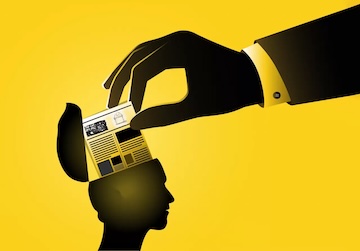
Disinformation damages democracy, but perhaps not in the way you think
Many Australians are aware of the influence of misinformation and disinformation on elections, but there are more insidious ways it harms our democratic society

June 13, 2024
Finding a faster, cheaper way to curb misinformation
Piers Howe
The spread of false information is jeopardising global health and security, prompting the need to find quick, cost-effective interventions.
November 22, 2023
Move over, agony aunt: study finds ChatGPT gives better advice than professional columnists
Piers Howe
We tested how ChatGPT stacks up against professional advice columnists – with some intriguing results.
December 18, 2018
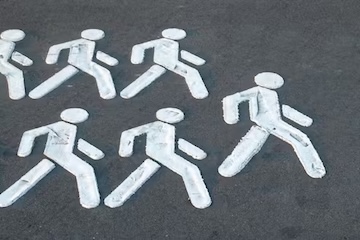
Conform to the social norm: why people follow what other people do
Campbell Pryor & Piers Howe
Just because somebody else does something doesn’t mean you have to follow. Or does it?
January 14, 2014
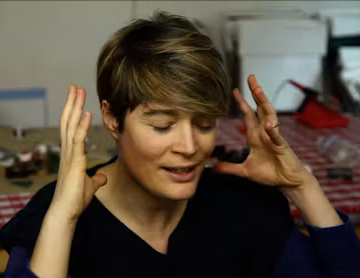
Know this: the ‘sixth sense’ is all in your head
Piers Howe & Margaret Webb
Many of us have had this experience: you’re sure that something has changed, but unable to say what it is. Perhaps a colleague has new glasses, or has grown a beard. For all of your trying to identify…
Hallmark Research Initiative: Fighting Harmful Online Communication
The Fighting Harmful Online Communication Hallmark Research Initiative coordinates interdisciplinary research on the harms resulting from mistaken, misleading, exaggerated, polemic and deliberately false online communications, bringing together researchers from HASS and STEM to pursue an innovative approach to the problem.
Please click here for more details.
PhD Opportunities
The lab currently has an opening for a PhD student. The candidate would need to be able to obtain funds through the Research Training Program (RTP). If you are interested, please contact Piers at pdhowe@unimelb.edu.au
Honours Student
The lab has openings for Honours students but these positions are allocated by the school to students who have been admitted into the 4th year Honours program in psychology. Please see here for more details.
RA, Interns and Summer Students
There are currently no opportunities for RAs, interns or summer students.